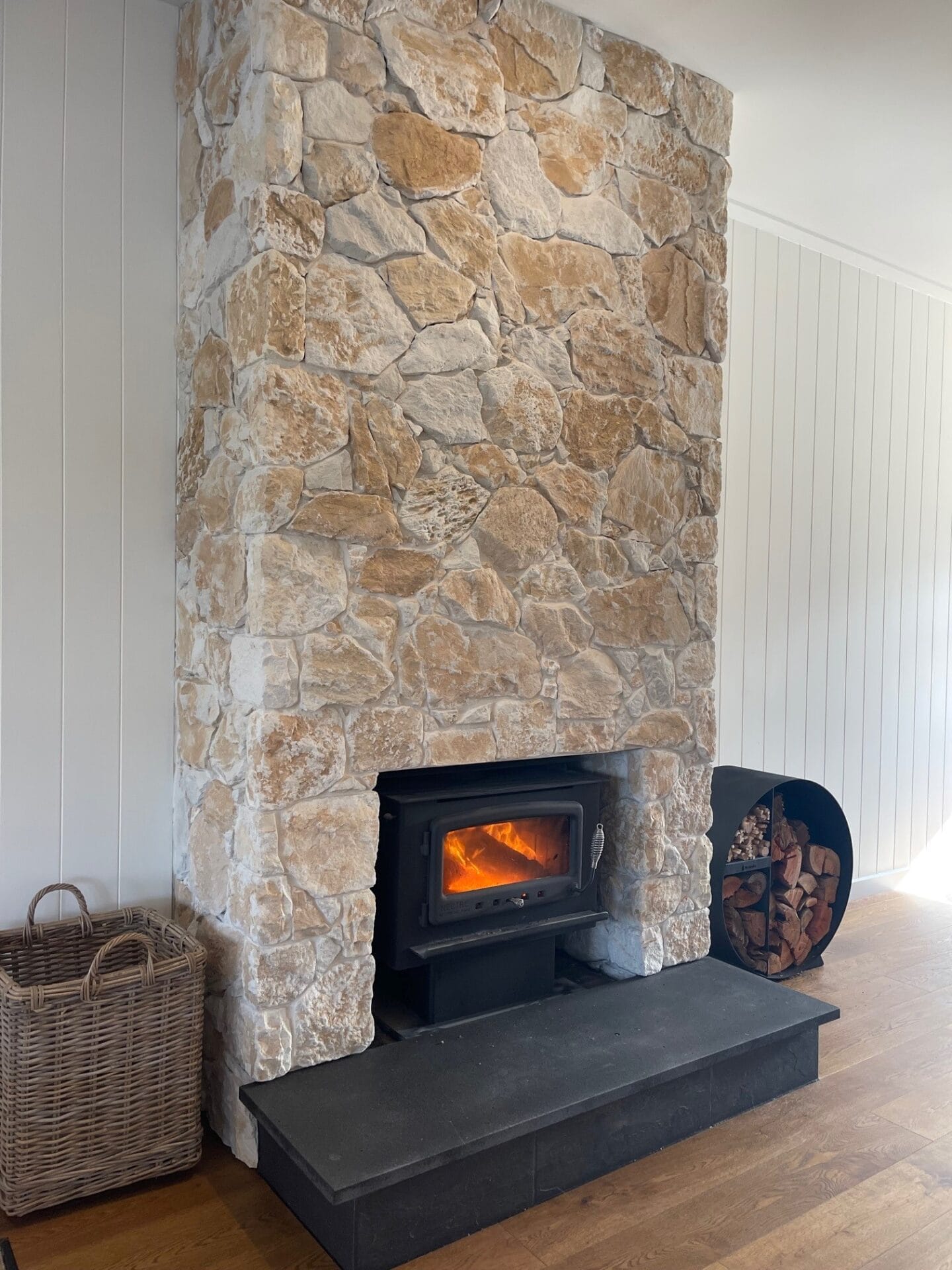
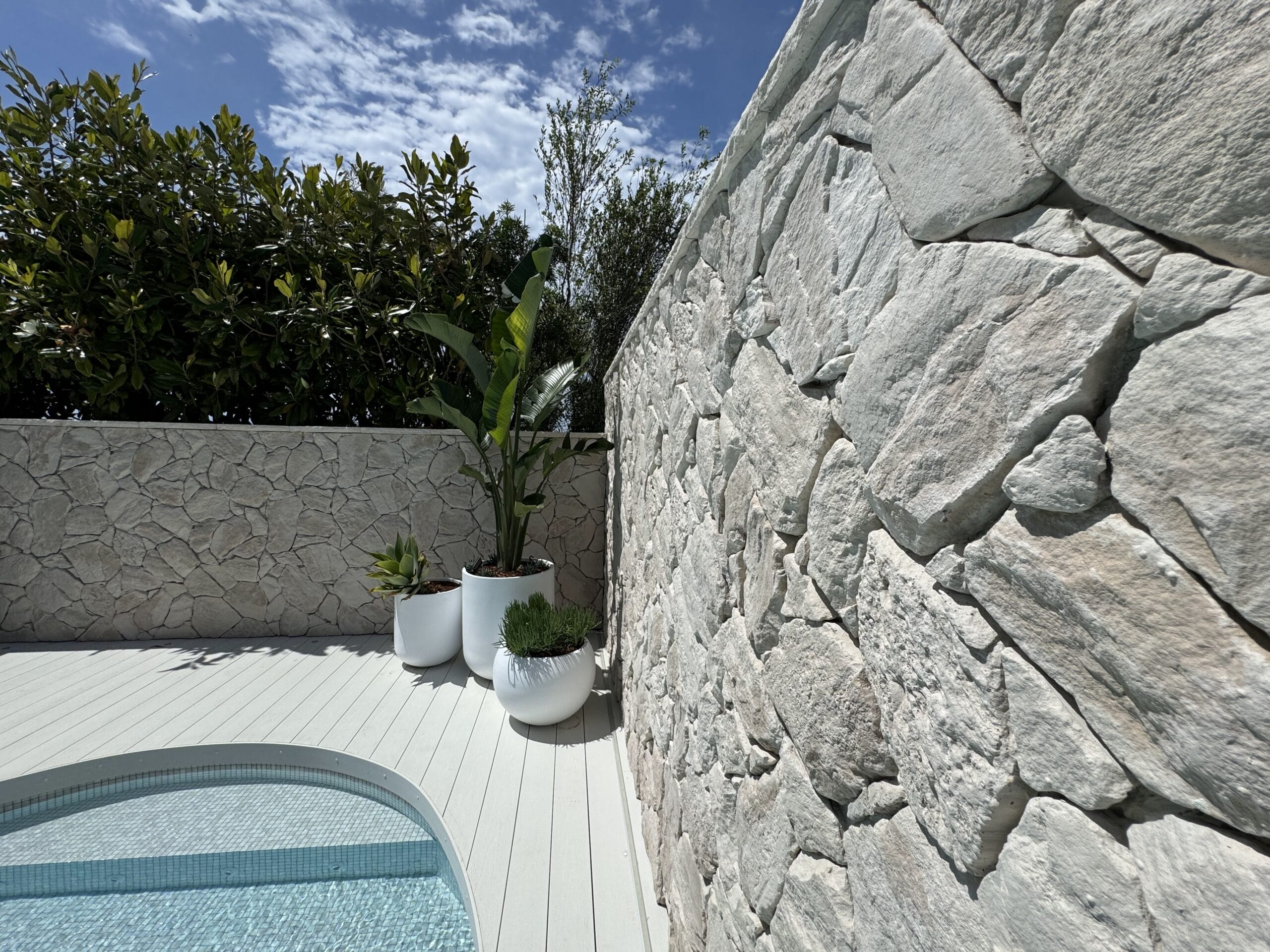
When choosing between natural stone and veneer stone for walls, it’s important to understand common issues such as installation, porosity, moisture, and maintenance. Veneer stone often reduces weight and sealing demands, while natural stone requires more structural support and upkeep. Both can deliver long-lasting results with proper installation and care.
Issues with Using Natural Stone on Walls
Substrate & Installation:
Requires a strong, stable substrate—more costly and labour-intensive to install, especially with intricate designs or uneven surfaces. Improper installation can trap moisture, causing damage.
Porosity & Staining:
Many natural stones (like limestone or travertine) are porous, making them prone to stains. Sealing is necessary but may need frequent reapplication. Harsh cleaning products can damage the surface.
Thermal & Moisture Concerns:
Susceptible to warping from temperature fluctuations, and high porosity can lead to dimensional instability, cracking or other issues. Moisture trapped behind the stone can cause deterioration.
Other Considerations:
More expensive than veneer options, requiring regular maintenance to retain appearance. Some natural stones can be slippery when wet, posing safety risks. Skilled professionals are recommended for installation.

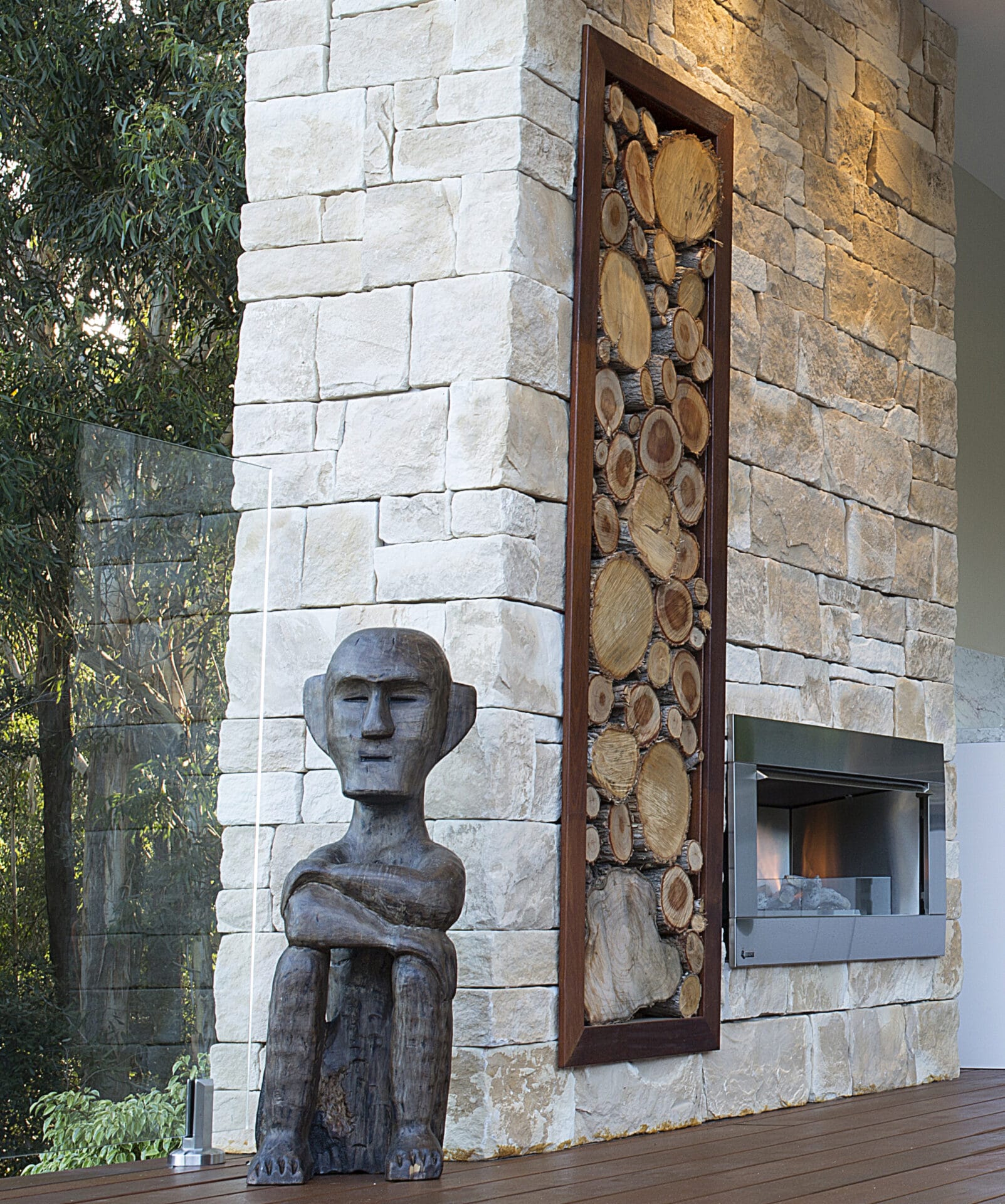
Common Issues Shared by Natural and Veneer Stone
Substrate & Installation:
Both need a proper, stable substrate; veneer stone is lighter, reducing structural demands. Installation can be time-consuming and requires care to avoid moisture issues.
Moisture & Staining:
Improper installation can trap moisture behind either type, leading to damage. While natural stone is more porous and susceptible, some veneer stones also need sealing depending on material.
Durability & Stability:
Both can experience damage from trapped moisture. Natural stone is generally less stable under extreme conditions, but good quality veneer is designed for better stability.
Maintenance & Professional Installation:
Proper, professional installation is critical to prevent future issues. Both materials require maintenance, with veneer stone typically needing less sealing and cleaning.
Differences Between Veneer and Natural Stone
Weight & Structural Needs:
Veneer stone is significantly lighter, easing installation and reducing the need for reinforced structures.
Appearance & Consistency:
Veneer offers uniformity in colour and texture, with more design options. Natural stone varies naturally, providing a unique, authentic look.
Porosity & Sealing:
Veneer generally has lower porosity, resulting in less frequent sealing. Natural stone’s porosity varies, often requiring regular sealing.
Cost & Durability:
Veneer is usually less expensive and easier to handle, but natural stone can be more durable over time. Veneer may not weather as well under extreme conditions.
Environmental Impact:
Manufacturing veneer often uses fewer resources compared to quarrying natural stone, making it more environmentally friendly.